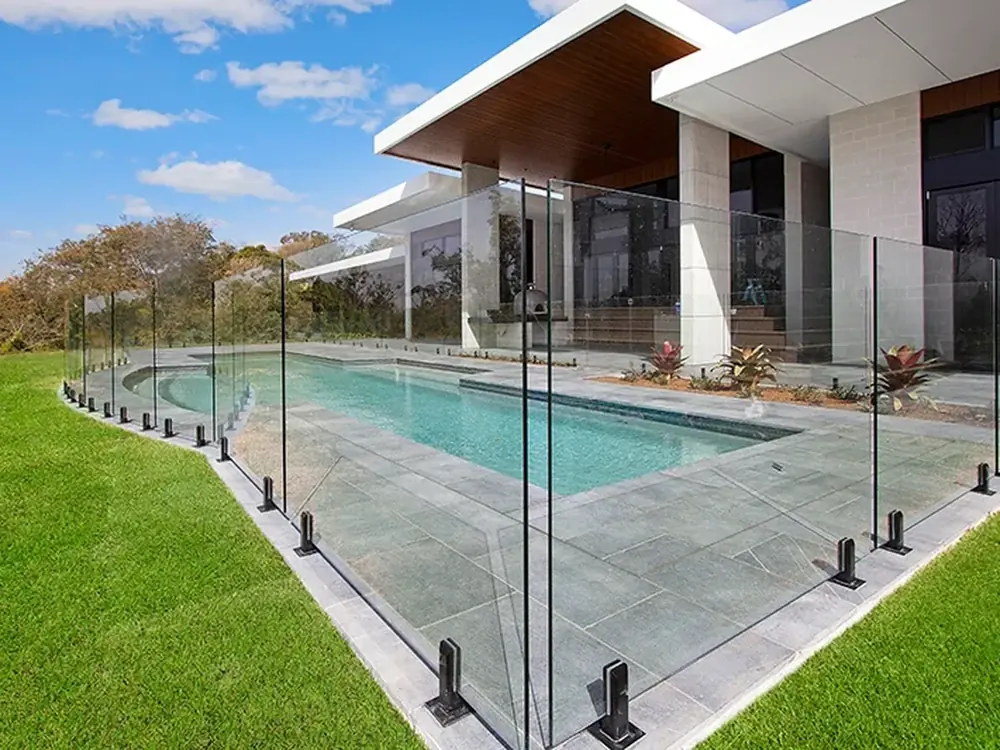
If you own a pool in Victoria — or you're thinking about putting one in — pool fence compliance is one of those topics where the cost of not knowing is genuinely high. Penalties run into thousands of dollars per offence, your home insurance won't pay out on a claim if your barrier isn't compliant, and the real reason the rules exist is that pool drownings are a leading cause of accidental death for under-5s in Australia. So this isn't bureaucratic box-ticking — it's a serious area to get right.
This guide is a plain-English summary of what you need to know as a Mickleham, Craigieburn, or wider Melbourne-north pool owner in 2026. We install pool barriers regularly, we lodge the compliance paperwork, and we deal with the inspectors. Here's the lay of the land.
The two things every Victorian pool owner must do
Victoria's pool barrier system, run by the Victorian Building Authority, boils down to two obligations:
- Register your pool or spa with your local council (one-off, takes 10 minutes online, around $30-80 depending on council)
- Lodge a Certificate of Barrier Compliance every four years, signed by a registered pool safety inspector
That's it at the highest level. The inspector signs off your barrier against Australian Standard AS 1926.1 (the relevant version is determined by when your pool was first installed — older pools follow earlier versions of the standard, which is a quirk that catches a lot of owners out).
The core barrier rules in plain English
The standard is around 60 pages, but the requirements that matter to homeowners come down to these:
Height
A pool barrier must be at least 1.2 metres high, measured from the ground on the non-pool side of the fence to the top of the barrier. There are tighter rules near climbable objects — see "non-climbable zones" below.
Gaps in the barrier
No gap anywhere in the barrier — under it, between vertical members, or at corners — can be wider than 100mm. The 100mm rule is the toddler's-head test: a small child's head shouldn't be able to fit through.
Gap at ground level
The maximum gap between the bottom of the fence and the ground is 100mm. On uneven ground or sloped lawn this trips a lot of older installations.
Non-climbable zone (NCZ)
This is the rule that catches most existing pool barriers out. There must be a clear "non-climbable" zone around the barrier — no horizontal rails, planter boxes, BBQ tables, pot plants, pool pumps, tree branches, or anything else a toddler could use as a foothold to climb over.
- Outside the barrier: 900mm radius clear zone, measured from the top of the fence outward and downward in an arc
- Inside the barrier: 300mm clear zone from the top inward
- Horizontal rails: if your barrier has horizontal rails (most aluminium pool fences do), the rails must be at least 900mm apart vertically — or on the inside of the fence facing the pool, not the outside
A pot plant or outdoor chair pushed against the outside of the fence by a tenant, kid, or gardener. The NCZ check is done on the day of inspection — it doesn't matter if it's "normally" clear.
The gate — where most barriers fail
Inspectors fail more pool barriers on gate issues than on any other single category. The gate must:
- Self-close from any position (including held fully open) to a fully latched state, without manual help
- Self-latch with no human intervention — you can't have to lift, push, or turn anything
- Have the latch release at least 1.5 metres above ground, OR shielded inside a 450mm radius shroud so a child can't reach it
- Open outwards away from the pool
- Have hinges that don't allow the gate to be lifted off the post
Spring hinges wear out. A 5-year-old gate that worked perfectly when installed will probably fail self-closing now because the spring tension has dropped. We replace pool gate hinges on existing barriers almost weekly — it's a 30-minute job that turns a "fail" inspection into a "pass".
The inspection process — what actually happens
- You book a registered pool safety inspector (council can give you a list, or check vba.vic.gov.au)
- Inspector visits, walks the barrier with a measuring tool and checklist, tests the gate, takes photos
- If everything passes, they issue a Certificate of Barrier Compliance (Form 23)
- You submit the certificate to your council within 30 days
- Council records compliance until the next required inspection (every 4 years)
If the barrier fails, the inspector gives you a written list of defects and 60 days to fix them. They'll re-inspect (usually for a reduced fee) and then sign off when everything's right.
What it costs in Mickleham and the northern suburbs
- Council registration: $30-80 one-off
- Inspection fee: $200-350 per inspection
- Council lodgement of compliant certificate: $25-50
- New compliant barrier install: $250-400/metre for frameless glass, $150-220/metre for aluminium tubular, plus $400-800 for a compliant gate
Penalties for non-compliance
Councils in Victoria can issue infringement notices of up to ~$1,800 per offence for failing to register, failing to lodge a certificate, or having a non-compliant barrier. In serious cases involving injury, the matter can escalate to court and the penalties run much higher. Insurance is the bigger worry — if a non-resident is injured in your pool and your barrier isn't compliant, your public liability cover almost certainly won't respond.
Common mistakes we see
- Pot plants and outdoor furniture pushed against the barrier (NCZ fail)
- Aluminium fences with horizontal rails facing outward (climbable)
- Dog door or pet flap in the gate (gap fail, climbable, almost always fails)
- Mulch or garden bed built up against the fence reducing effective height
- Worn spring hinge on the gate (self-close fail)
- Boundary fence used as part of pool barrier with neighbour's BBQ on the other side (NCZ fail from neighbour's side)
The honest summary
Compliance isn't hard to achieve, but it's surprisingly easy to fall out of compliance through small day-to-day changes — a new garden bed, a chair left against the fence, a hinge that's quietly aged out. Even if you got a Form 23 four years ago, walk your barrier with this list before your next inspection.
We install compliant pool barriers, repair existing ones to pass inspection, and can co-ordinate the inspector for you if you prefer to outsource the whole thing. Free quotes across Mickleham and the surrounding northern suburbs.